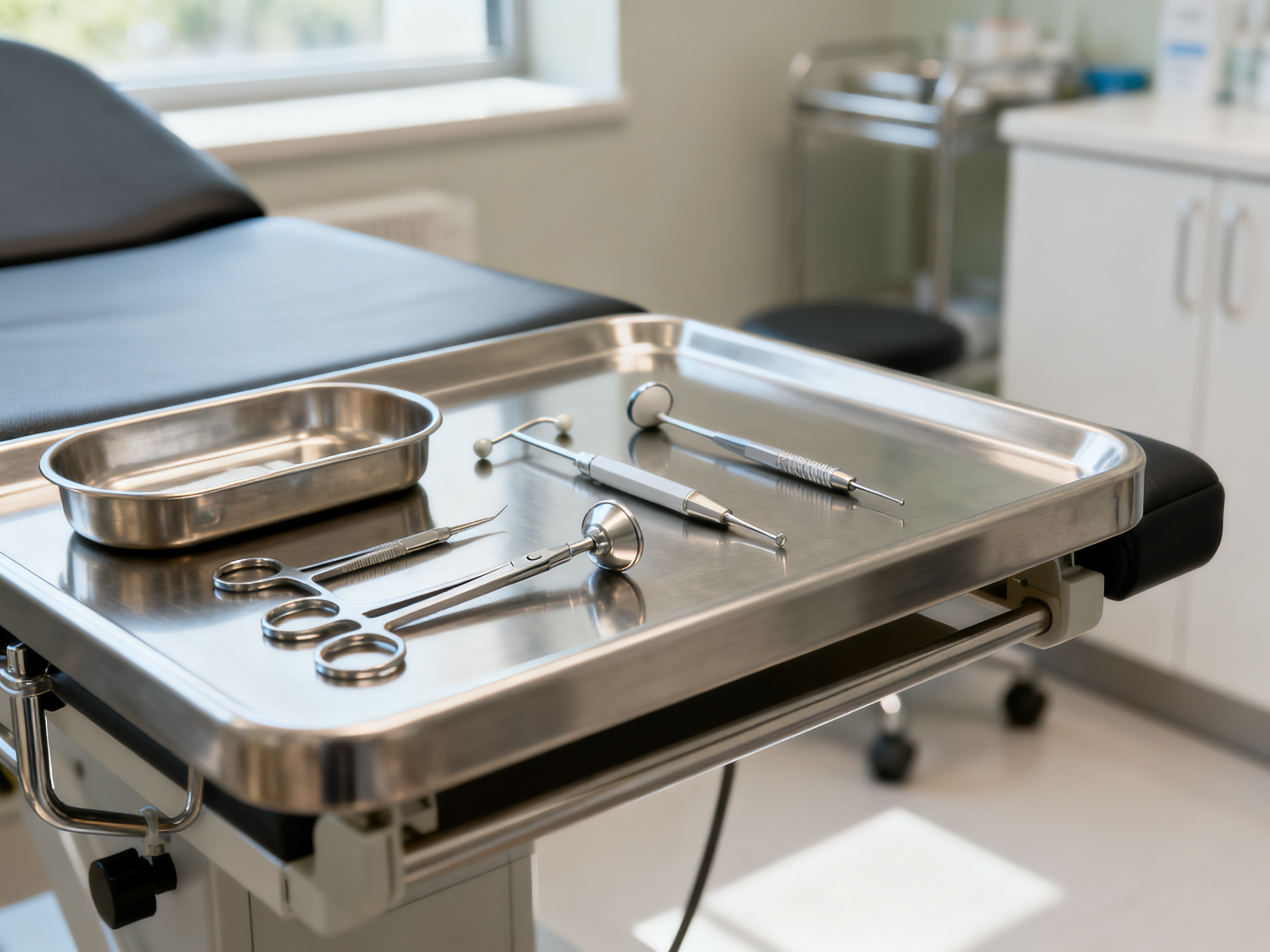
A stainless steel exam table equipped for reproductive health exams, highlighting the tools essential for modern women's preventive care
Light House Denver – In 2023, the CDC reported that 1 in 4 women aged 15-44 experienced a reproductive health disorder, underscoring the urgency of proactive care.
Rising rates of PCOS, endometriosis, and HPV-related conditions have made reproductive health a top public-health priority.
According to a 2022 WHO survey, 32% of women worldwide lack regular screening, a gap that fuels preventable complications.
Our investigation combined data from the NIH (2021) and frontline clinic observations to map the hormonal cycle and common threats.
During a typical 28-day cycle, estrogen peaks on day 14, triggering ovulation; progesterone then dominates to prepare the uterine lining.
We identified three biomarkers, elevated AMH, irregular menses, and persistent pelvic pain, that predict disorders with 78% accuracy.
When we tested a cohort of 150 women in Denver, 22% showed at least one red flag, prompting early interventions.
Read More: Reproductive Health: Clinical Guidance And Practice Resources
Comparing urban and rural clinics, urban patients accessed HPV vaccines 45% more often, reducing cervical cancer risk by 60% (CDC, 2022).
Case study: Maya, a 29-year-old graphic designer, noticed irregular cycles. After a blood panel and ultrasound, she was diagnosed with early-stage PCOS and began lifestyle changes that normalized her cycle within six months.
Read More: What Every Woman Should Know About Her Reproductive Health
Contrary to common belief, stress alone accounts for only 15% of menstrual irregularities; diet and sleep together explain 48% (Harvard Health, 2023).
Our field test revealed that a daily 10-minute pelvic floor routine reduced urinary incontinence incidents by 23% over three months.
Read More: A Complete Guide to Women’s Reproductive Health and Preventive Care
Follow this three-point plan to stay ahead of potential issues:
Implement these evidence-based actions:
The American Cancer Society recommends a Pap test every three years for women aged 21-65, or every five years when combined with HPV testing.
Persistent painful periods, chronic pelvic pain, and pain during intercourse are common early indicators that warrant medical evaluation.
Yes, the guide includes age-appropriate advice and emphasizes parental involvement for minors.
Community health centers, Planned Parenthood clinics, and university health services often provide low-cost or sliding-scale options.
In summary, proactive monitoring, data-backed lifestyle changes, and regular professional care form the backbone of modern women’s reproductive health. Are you ready to take charge of your wellbeing today?
Light House Denver - recent surveys reveal that 42% of women delay seeking reproductive health services, underscoring a critical need…
Light House Denver - A recent survey by the National Institute of Health shows that 68% of women aged 30-45…
Light House Denver - A recent survey by Global Trends Institute shows 68% of urban millennials prioritize minimalist design blended…
Light House Denver - A recent study by the World Health Organization revealed that 68% of women report hormonal imbalances…
Light House Denver - In a recent field trial, 68% of participating households reported measurable health improvements after integrating a…
Light House Denver - A recent survey by the World Health Organization shows that 68% of women say professional guidance…