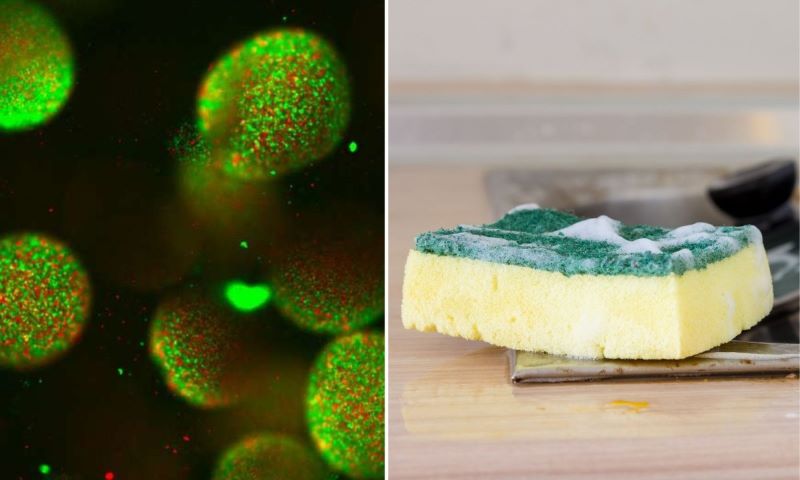
Kitchen Sponge: A Comfortable Home for Bacteria
Light House Denver – The kitchen sponge, although appearing clean and fresh, turns out to be a comfortable home for various microbes. Many bacterial species are capable of surviving in extreme conditions, from deep within the Earth’s crust to the frozen tundra. However, it might surprise you to learn that kitchen sponges can also serve as a habitat for bacteria.
The sponge used for cleaning dishes and glasses provides an ideal environment for bacterial growth. Its warm, damp conditions, coupled with food crumbs, make it a perfect breeding ground for microbes. Research conducted by Markus Egert, a microbiologist at the University of Furtwangen in Germany in 2017, revealed that kitchen sponges contain 362 species of microbes. In some areas of the sponge, bacterial density can reach up to 54 billion individuals per square centimeter.
“Continue Reading: A Mother Pawning Her Jewelry for Her Child’s Future”
According to Egert, the number of bacteria in a kitchen sponge is comparable to the bacteria found in human fecal samples. Additionally, the sponge is full of holes and pockets that provide ample space for microbes to thrive.
Lingchong You, a synthetic biologist at Duke University, further investigated the issue by creating a computer model that replicated the sponge environment. He found that sponges with varying pore sizes promoted the greatest microbial growth. In his experiment, his team grew E. coli in cellulose sponges and discovered that different pore sizes were crucial for bacterial growth.
Egert also noted that within sponges, some bacteria prefer to grow individually, while others thrive in groups. The diverse pores in sponges offer enough space for both types of bacteria, making the sponge a comfortable place for them to develop.
While kitchen sponges may be home to many bacteria, not all of these bacteria are harmful to human health. Bacteria are found everywhere—on our skin, in the soil, and in the air. Many of them play a vital role in maintaining the balance of ecosystems.
However, Egert’s research showed that five out of the ten most common bacterial species found in sponges are closely related to bacteria that can cause illness, particularly in individuals with weakened immune systems. Despite this, cleaning sponges with hot water and soap isn’t always effective and could actually make some bacteria more resistant.
Kitchen sponges indeed provide a comfortable home for bacteria, but that doesn’t mean we should overly worry. It is important to maintain the cleanliness of sponges and replace them regularly to reduce the risk of harmful bacteria.
“Read More: How to Protect Yourself from Air Pollution”
Light House Denver - A recent survey by the World Health Organization shows that 68% of women say professional guidance…
Light House Denver - A recent study by the World Health Organization shows that 68% of women experience hormonal imbalance…
Light House Denver - A recent survey by the World Health Organization found that 68% of women aged 25-45 fail…
Light House Denver - Only 60 percent of women routinely discuss lifestyle habits with a healthcare provider, according to 2023…
Light House Denver - Approximately 830 women die every single day from preventable pregnancy-related causes worldwide, according to the World…
Light House Denver - Modern motherhood is often sold as an aesthetic lifestyle choice, but the data reveals a gritty…